

Sweden’s national road traffic crash database – Strada – is unique in the world. However, there are shortcomings: the police report too few incidents, the system is difficult to use, and many fatal crashes are not recorded. In the long term, this could have serious consequences for road safety.
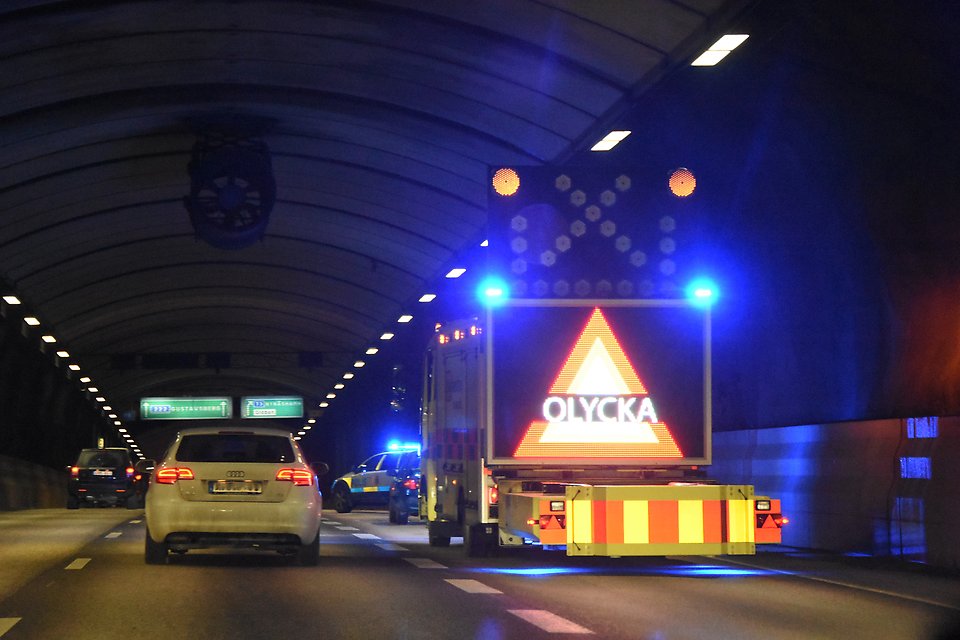
Strada was established in 2003 and is unique in combining data from both the police and emergency healthcare services on traffic crashes. The system is a cornerstone of Sweden’s road safety efforts and is used for monitoring, evaluation and research. It is utilised by officials at government agencies, investigators and researchers alike.
In recent years, shortcomings in the database have become increasingly apparent, and a new report from VTI highlights several significant issues. The most serious is that the police have downgraded their work with Strada and are reporting fewer and fewer incidents – between 2017 and 2023, the number of crashes recorded by the police fell from around 15,000 to just over 11,800.
And unfortunately, the actual number of crashes has not decreased by that much. It has long been known that the police attend fewer crashes and report less when they are on site, says Christian Howard, lead author of the report, adding that he does not wish to point fingers.
“I would like to emphasise that the majority still handle this well. They put in a great deal of work, which is extremely important.”
Other shortcomings highlighted in the report include the fact that individuals with protected personal data are not recorded in Strada at all. Together with the police’s deprioritisation, this means that the number of fatal crashes in the database is too low – in 2024, 34 fatalities were missing, around 15 per cent of the total number of people killed in traffic.
Usability could also be improved if deficiencies in documentation and manuals were addressed. The system is not supposed to require any specialised knowledge, yet Christian Howard says that, as VTI’s Strada expert, he frequently receives questions about how to use it and about different parts of the database.
The link to the National Road Database, which is intended to provide information on road conditions at the crash site, is also not functioning satisfactorily. Information about procedures and legislation that have changed and affected crash statistics is also missing from the database.
Overall, these sound like quite serious shortcomings. How useful will Strada be if they are not addressed?
“They will have direct consequences for road safety work as a whole, absolutely. Strada shows how, when and why people are injured in traffic and which road safety measures are effective. It provides extremely important data that guide authorities in their work,” says Christian Howard.
He highlights another aspect that makes reliable statistics so important. The development of autonomous vehicles and various AI applications in transport relies on the use of large volumes of collected data. If we do not have information about the crashes that occur, we cannot assess whether these systems actually improve road safety.
“If we do not collect data, we will also lack a reliable picture of the societal costs of road traffic fatalities and injuries.”
The report concludes with a number of recommendations to improve data quality and make Strada more user-friendly. The top priority is for the government and relevant authorities to discuss how the police’s work can be given higher priority. In addition, information on crashes involving individuals with protected personal data should be included, the link to the National Road Database should be clarified, and the reporting tools used by the police and healthcare services should be improved.
Several recommendations also concern usability and the need for clearer manuals.
Facts about the report
- Title: Data quality in the Swedish Transport Agency’s road traffic crash database (Strada): A description from a user perspective
- Authors: Christian Howard and Åsa Forsman, VTI
- Publication: VTI Report 1261, published in 2026
- Purpose: To describe the data quality of Strada from a user perspective and provide recommendations for improvement
- Method: Analysis of Strada data, document studies and expert interviews
Short summary
- Strada is of central importance for road safety analysis but has shortcomings in data quality
- Not all fatalities are recorded, partly due to protected personal data
- Links to the National Road Database (NVDB) are difficult to interpret and use
- Better documentation and clearer metadata are needed to improve usability
- A number of recommendations are provided to improve data quality
Contact
- Christian Howard
Researcher
christian.howard@vti.se




Follow us: